
Checking Criminal History in Chatham County
No single Chatham County criminal record source answers every question. Begin with the kind of event you need to confirm. Court charges and dispositions belong with the Clerk of Superior Court. A sheriff incident report belongs with Sheriff Records. Current confinement belongs in the jail roster, while an older fingerprint-supported North Carolina history requires the SBI Right to Review process.
Gather the full name, likely spelling variants, event date, agency, county, and case or incident number if known. Those details help separate people with similar names and reduce false matches. Then follow the record from its first custodian to its final court result.
- Search the North Carolina Judicial Branch Portal for a Chatham County case or use a courthouse public terminal.
- Check the Sheriff Inmate Search for current custody and the weekly Arrest Blotter for recent sheriff arrests.
- Ask the creating police agency or Sheriff Records for the incident or arrest report.
- Request a certified Chatham County court search when a formal county disposition is needed.
- Use SBI Right to Review for your own fingerprint-supported statewide North Carolina history.
Five Chatham County Record Systems
Chatham County criminal history is split among systems with different time frames and purposes. The eCourts Portal follows filed cases. The clerk supplies public-terminal access, copies, and certified county searches. The Sheriff keeps reports, a live jail roster, and a weekly blotter. SBI connects fingerprint-supported arrest cycles with reported outcomes. NCDAC covers state prison and community supervision rather than local pretrial detention.
| Channel | Best answer | Main limit |
|---|---|---|
| eCourts Portal | Filed Chatham County case and docket | Not a certified background check |
| Clerk of Superior Court | Case documents and certified county search | Chatham search is not a statewide rap sheet |
| Sheriff tools | Current custody and recent sheriff arrests | Do not prove conviction |
| SBI Right to Review | Your fingerprint-supported state history | Subject-only mailed process |
| NCDAC Offender Search | State custody or supervision | Does not replace the county jail roster |
Read the record that fits the question, then use another source to confirm the identity and outcome.
North Carolina Official Background Checks
The North Carolina State Bureau of Investigation does not offer a general public name-search product. Its official self-review route is Right to Review. A person obtains fingerprints, completes the current form, and mails it with a certified check or money order for $14 per copy. Chatham County Sheriff lists public fingerprinting through its main records line, but its site does not post a current fee or walk-in schedule.
The official SBI personal-review page shows the state process and should be checked before assembling the packet.
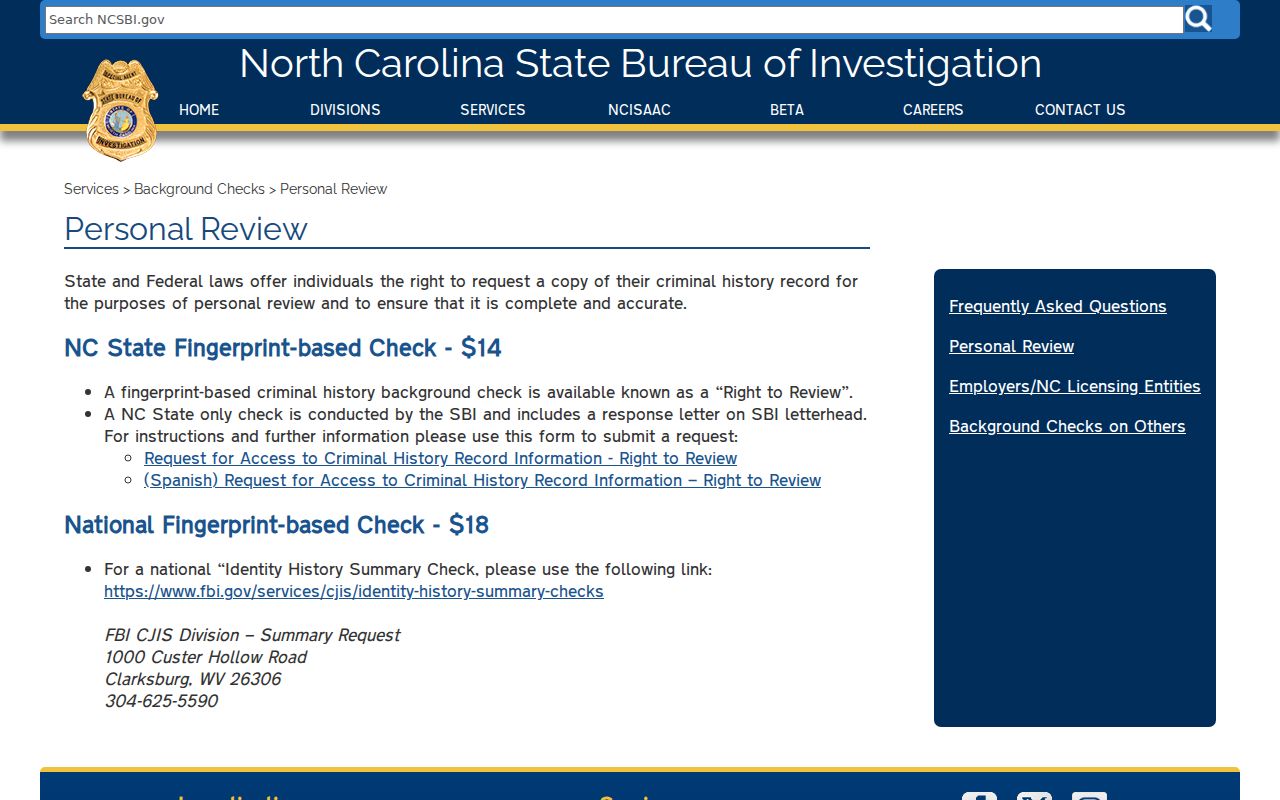
This state page is the controlling source for forms, payment rules, and current submission instructions.
The FBI Identity History Summary is a separate national self-check. It does not replace Chatham County court records or an SBI review. These products can differ because each draws from a distinct source and scope.
Chatham Clerk Check Versus SBI Review
Two official checks often get confused. The Chatham County Clerk offers a $25 certified name-based search of Chatham court records. SBI offers a $14 fingerprint-based review of the requester's own North Carolina history. The clerk search is county court data, while SBI works from fingerprint-supported state repository cycles.
| Product | Scope | Fee and route |
|---|---|---|
| Certified clerk search | Chatham County court records by name | $25 with AOC-CR-314, in person or by mail |
| Courthouse terminal | Noncertified court information with statewide search capability | Free to search; printing may cost |
| SBI Right to Review | Your fingerprint-supported North Carolina history | $14 per copy by certified check or money order |
| Sheriff fingerprint service | Fingerprint capture only | Call to confirm the current fee and schedule |
The Judicial Branch criminal-record check page explains the clerk options and warns that Portal is not the formal background-check route.
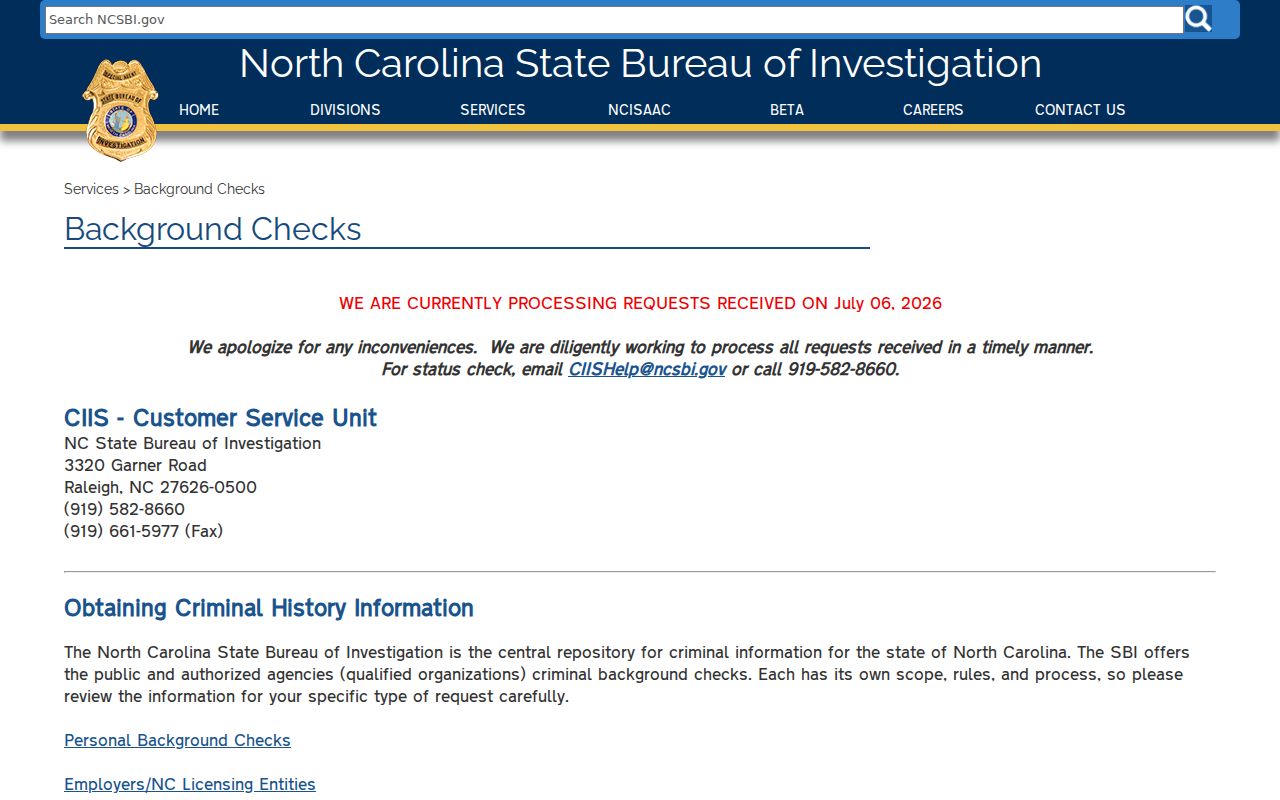
The screen helps distinguish the county clerk product from a fingerprint-based state history.
Criminal Record Types
Each Chatham County criminal record describes one stage of an event. An incident report records what an agency received or investigated. A booking record marks detention intake. A court file tracks charges, hearings, decisions, and sentence. SBI history links supported arrest cycles to reported dispositions. NCDAC and the registry answer still narrower questions.
- Incident and arrest report: held by the Sheriff or city police agency that created it.
- Booking and custody record: held by Chatham County Detention for local intake and current confinement.
- Criminal case file: held by the Clerk for District and Superior Court matters.
- Warrant or order for arrest: court process that may be restricted while unserved or sealed.
- State custody or supervision: maintained by NCDAC, separate from the county jail.
The NCDAC Offender Search is the right state layer for sentenced custody or supervision.
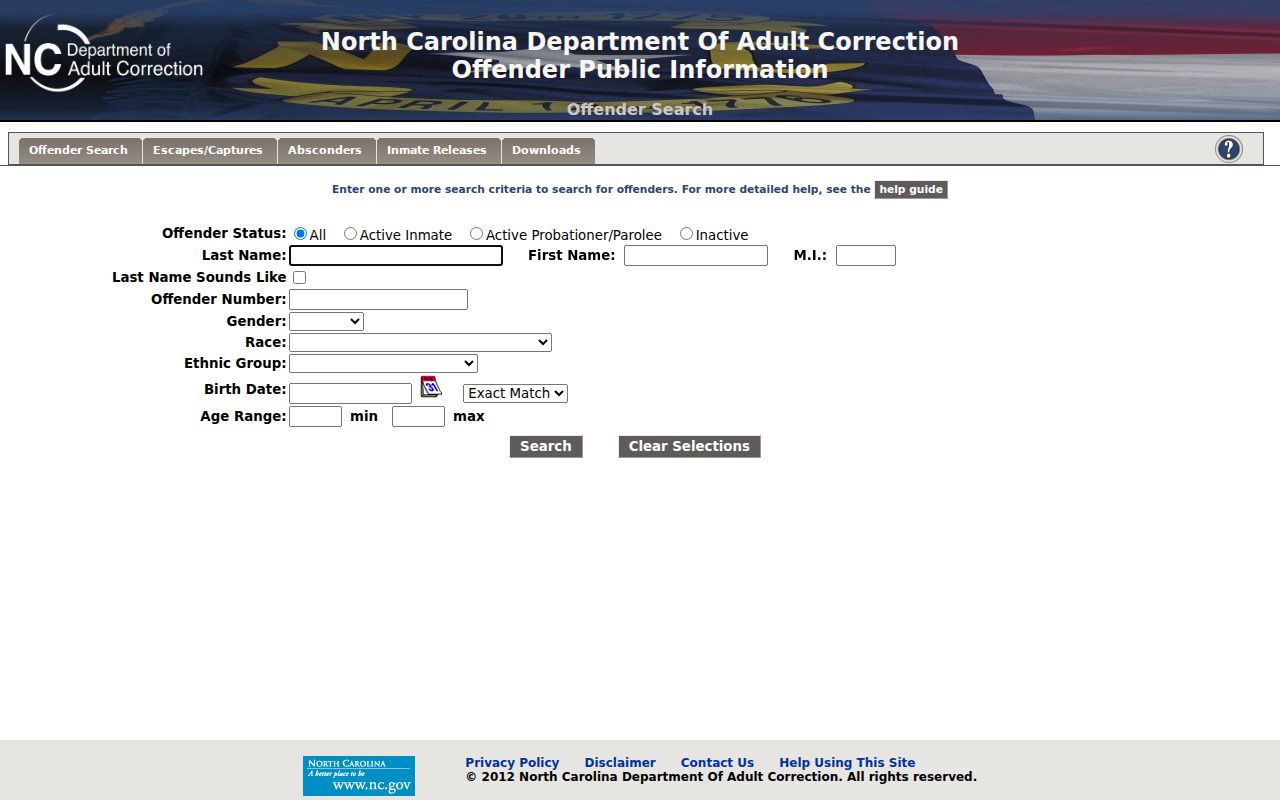
Its results should be compared with the Chatham County judgment rather than treated as a county jail entry.
Chatham County police reports add another layer. Pittsboro, Siler City, Cary, Chapel Hill, the State Highway Patrol, and special agencies keep the reports they create. A report request should name the incident number when possible, plus the date, time, location, agency, and record type. Ask whether the desired item is a public arrest fact, crash report, CAD event, 911 recording, or audiovisual record because North Carolina applies different access rules to each. The county's general request form does not replace a direct request to the police or Sheriff custodian.
Chatham County Custodian Lanes
Chatham County publishes a useful routing rule. Sheriff incident reports do not go through the county's ordinary contact form. Ask Sheriff Records at 919-542-2811. Court document copies go to the Clerk at 919-545-3500. Requests for records held by ordinary county departments can use the county Public Records Form.
The Sheriff contact directory separates records, detention, fingerprinting, public information, and sex-offender registration.
Choosing that direct line first avoids sending an incident request to an office that does not keep it.
Clerk of Superior Court
40 E. Chatham Street
Pittsboro, NC 27312
919-545-3500
Weekdays, 8:30 a.m. to 5:00 p.m.
Sheriff Records
295 West Street
Pittsboro, NC 27312
919-542-2811
Call to confirm request details.
Inside a Chatham County Criminal Record
A Chatham County criminal record must be read in its source format. A rap sheet centers on identity, fingerprints, arrest cycles, charges, and matched dispositions. The court file centers on a case number, parties, filings, hearings, judgments, and financial entries. A booking card instead emphasizes present custody, descriptors, intake time, and charges listed at booking.
| Name and identifiers | Legal name, aliases, demographic data, and source-specific identifiers. |
|---|---|
| Arrest and booking | Agency, event date, intake data, and fingerprints where collected. |
| Charges | Alleged or filed offenses, which can change as prosecution proceeds. |
| Disposition | Result by charge, such as dismissal, acquittal, PJC, or conviction. |
| Sentence | Judgment, custody, probation, restitution, or other ordered terms. |
| Supervision | State custody or community status when publicly available. |
Note: A field missing from one Chatham County system may still exist in the originating agency or clerk file.
Chatham County Jail and State Custody
The Chatham County Inmate Search shows current local custody cards. A single text box filters results, and cards may show a name, inmate ID, physical description, photograph, booking time, and a status-notification control. The roster does not prove guilt and does not supply the final case disposition.
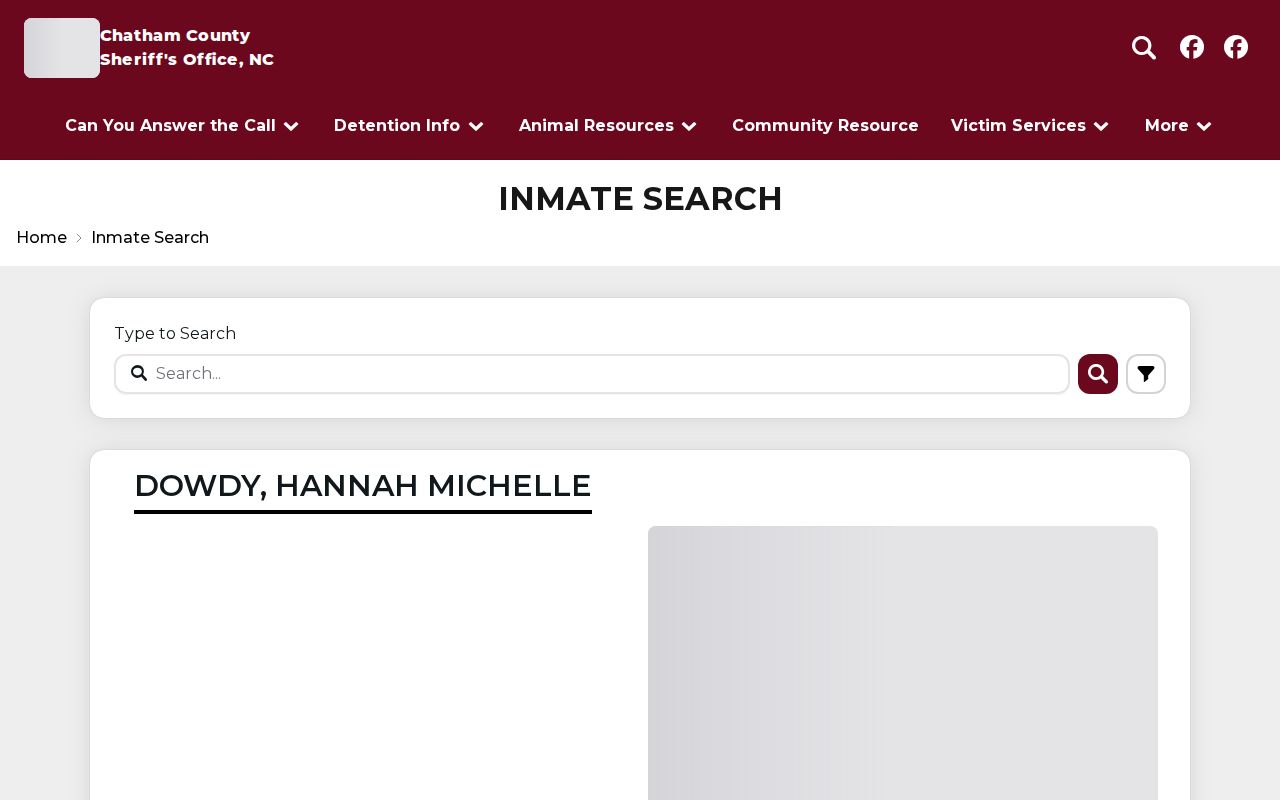
The live roster answers a present-custody question, while the weekly blotter and court docket cover different points in time.
State prison and state-run probation or post-release supervision belong with NCDAC. Its Community Supervision division administers those field services.
Chatham County warrants also require a multi-source check because no official local active-warrant name portal was located. A known case can be checked with the Clerk and Portal. Sheriff Records or nonemergency dispatch can route an agency question, while an order for arrest tied to a missed court event may appear in the court file. Unserved or sealed process may be unavailable. A blank online result therefore does not establish that no warrant exists, and routine records questions should not go to 911.
- Booking
- The jail intake record created after transport to detention.
- Probation
- A court-ordered community sentence supervised through the state structure.
- Post-release supervision
- Community supervision after a qualifying prison release.
- Disposition
- The recorded result of a charge or case.
Public Access Laws in North Carolina
The North Carolina Public Records Law starts with access but preserves specific limits. Chatham County agencies generally provide public records at reasonable times. Criminal investigative files are not broadly open, though listed arrest and event facts can be public. Protected identifiers, juvenile files, sealed matters, and some victim information remain restricted.
Key statutes:
G.S. 132-6 provides inspection and copying rights subject to lawful exceptions.
G.S. 132-1.4 separates public arrest facts from restricted investigative material.
G.S. 132-1.10 protects Social Security numbers and other listed identifiers.
G.S. 7B-3000 makes juvenile court records confidential except where law permits access.
Ask the actual custodian and describe the desired record with enough detail to identify it. Inspection is ordinarily free. Actual-copy costs and unusually extensive staff or technology costs may be charged under state law.
Chatham County Court Counter Mix-Up
Routine Chatham County criminal record business belongs at the modern Justice Center at 40 E. Chatham Street. The landmark 1881 courthouse in the traffic circle is a different building. Fire badly damaged that historic courthouse during renovation in 2010, and it reopened after restoration in 2013. A visitor who follows a landmark photo can reach the wrong counter.
The Chatham County Sheriff homepage presents a separate set of law-enforcement tools.
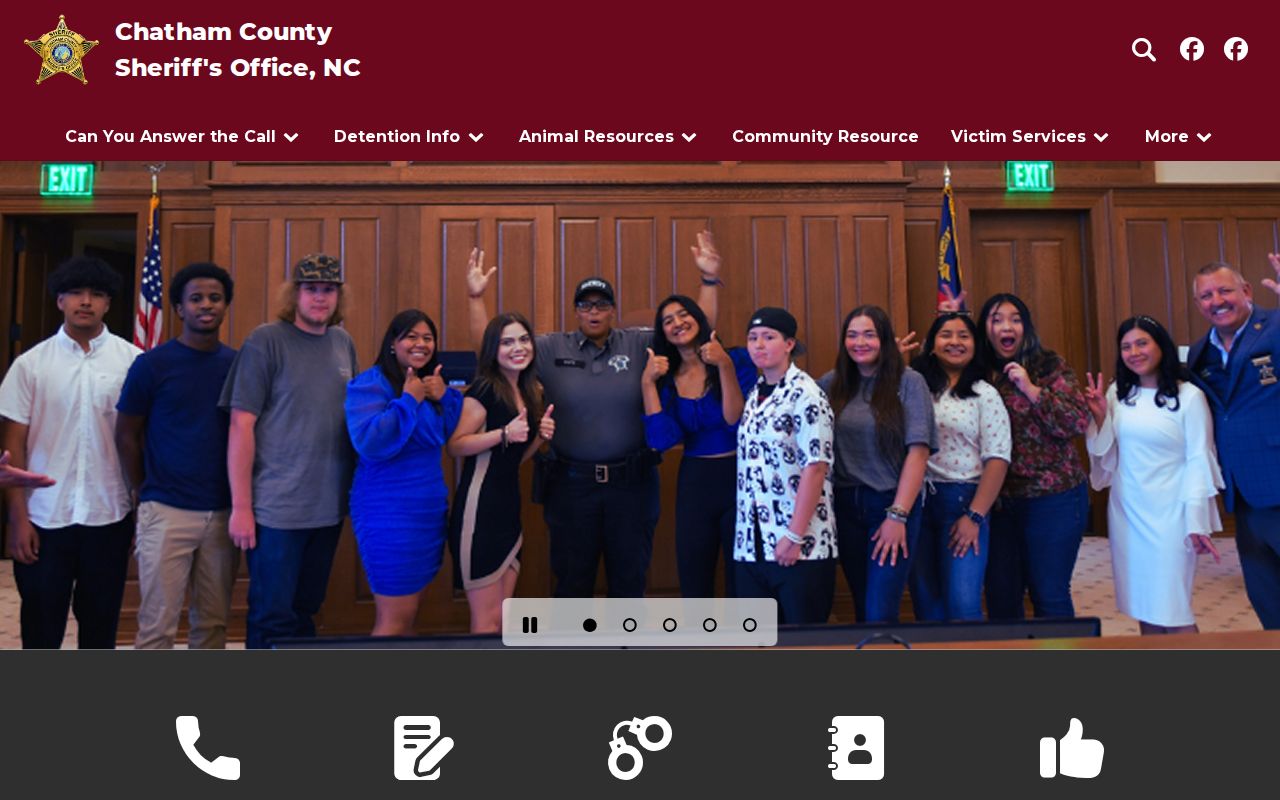
That split mirrors the records system: reports and custody stay with the Sheriff, while case documents and certified court searches stay with the Clerk.
Sealed, Expunged, and Restricted Records
North Carolina uses the term expunction. A qualifying petition from a Chatham County charge or conviction is filed with the Chatham County Clerk of Superior Court. The Judicial Branch states that the filing fee is generally $175, while many dismissal or not-guilty petitions have no fee unless a diversion or deferred-prosecution path applies. Processing can take months.
The Judicial Branch expunction page supplies current forms and filing guidance. Eligibility depends on the offense, outcome, prior history, waiting period, and other statutory rules. Juvenile files, sealed cases, protected identifiers, and confidential investigative material follow separate access limits.
An order affects official agencies covered by law. It should not be treated as an instant deletion from every old copy. Recheck both the clerk and SBI after enough processing time.
Waiting periods vary sharply. G.S. 15A-145.5 lists three years for one eligible nonviolent misdemeanor, seven years for more than one, ten years for one eligible nonviolent felony, and longer periods for certain other combinations. The later of conviction or completion of the active sentence, probation, or post-release supervision controls. Class A through G felonies, Class A1 misdemeanors, offenses with assault as an essential element, registry offenses, and several other categories are excluded. Use the current statute and forms rather than assuming the charge label alone decides eligibility.
Correcting Chatham County History
When an SBI entry tied to Chatham County looks wrong, first obtain the Right to Review result. Then use SBI's written-exception form and attach the court disposition or identity proof that supports the challenge. The originating Chatham County agency or clerk may need to fix its source data before SBI can reconcile the arrest cycle.
The SBI background-check program identifies the state repository's role. Keep the case number, agency, arrest date, and certified disposition together so each custodian can locate the same event.
A dismissal may appear in the court file while an older booking source still shows the original arrest. That difference does not by itself prove either record is false. It shows why the Chatham County case result should be read charge by charge and compared with the earlier agency record.
Chatham County Weekly Arrest Blotter
The Sheriff's weekly Arrest Blotter is not the same tool as the live jail roster. It can describe sheriff arrests by date, alleged offense, release condition or bond, and scheduled court. An entry can remain useful after a person leaves custody, but it is still an allegation record rather than a conviction list.
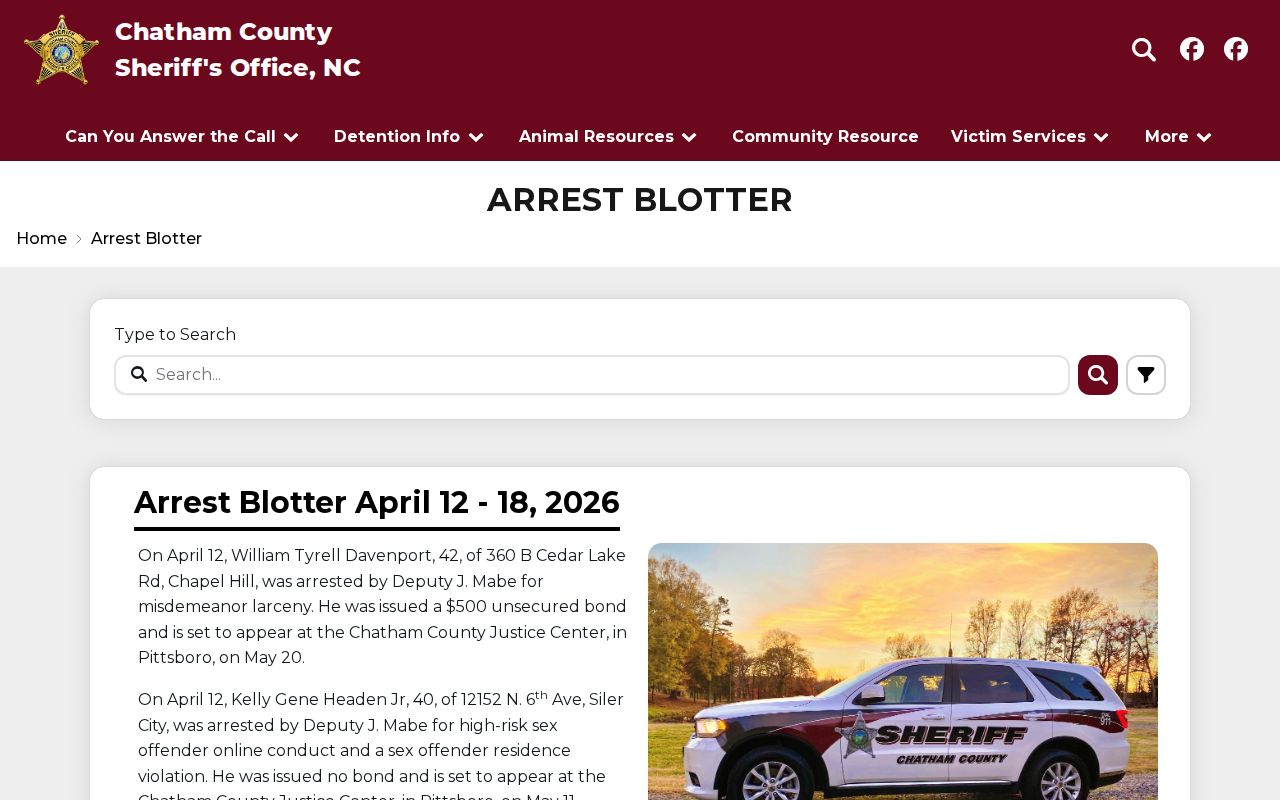
Follow the scheduled court information into the court calendar and eCourts record to learn whether charges were filed and how each charge ended.
The Sheriff's official biography page identifies the elected agency leadership behind these county services.
Agency leadership context does not change the custodian rule: direct copy and record questions to the relevant division.
Chatham County Criminal Records by City
Municipal police reports remain with the city agency even though Chatham County uses one unified state court system. Siler City and Pittsboro have their own police records channels. Cary crosses the county line, so the event location determines whether booking and prosecution flow into Chatham or Wake. None of the three has an independent municipal criminal court.
Siler City Criminal Records
7,838 Chatham residents. City police reports route separately from county booking and court files.
Pittsboro Criminal Records
5,996 residents. Police, Sheriff, detention, and court offices are close but remain distinct custodians.
Cary Criminal Records
4,409 residents in Chatham. Confirm the county side of the address before following the case.
Chatham County eCourts Milestone
Chatham County joined the eCourts rollout on April 29, 2024. The move brought Enterprise Justice, electronic filing, and free Portal case information while clerks shifted from older mainframe and paper systems. Scanning and data conversion mean some older events or document images may be incomplete online.
The North Carolina Sex Offender and Public Protection Registry is another statewide system, but it covers only people required to register.
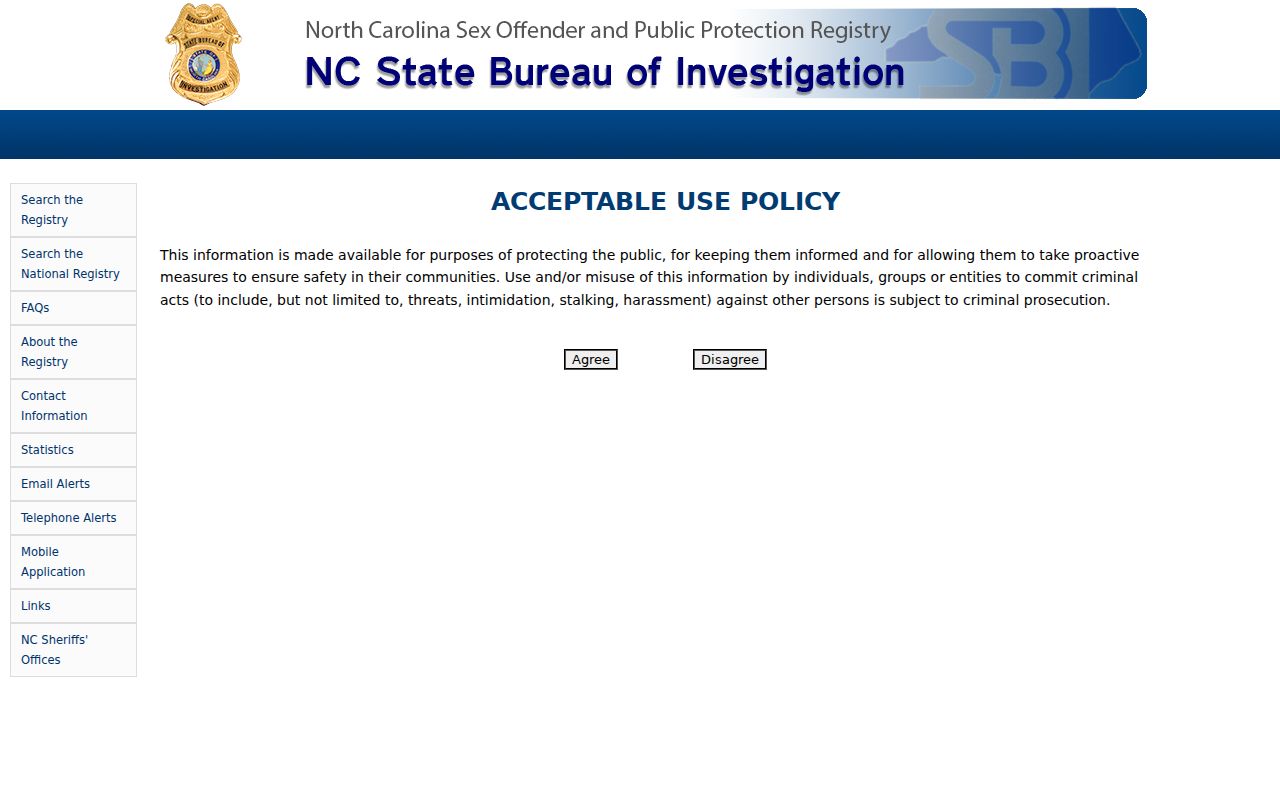
Registry data should never be read as a list of all offenses or all community risk.
If Portal lacks a document, use the case number and ask the Chatham County Clerk. The paper or clerk-held file can exist even when no image is available online. This courthouse fallback is especially important for converted events and confidential material that will not appear in a public view.
Criminal classifications also need the filed judgment. North Carolina Structured Sentencing combines the offense class with the person's prior-record level and the court's findings. District Court handles misdemeanors and early felony proceedings, while felony trials belong in Superior Court. A short Portal charge description or class does not reveal the sentence by itself. Review the judgment, disposition by charge, and any active supervision record before drawing a conclusion from a code.